PhD scholarships and research opportunities.
The scholarship page is the main place for current opportunities across AI Future, AI for Science, and AI for Health, including what to send and how to make contact.
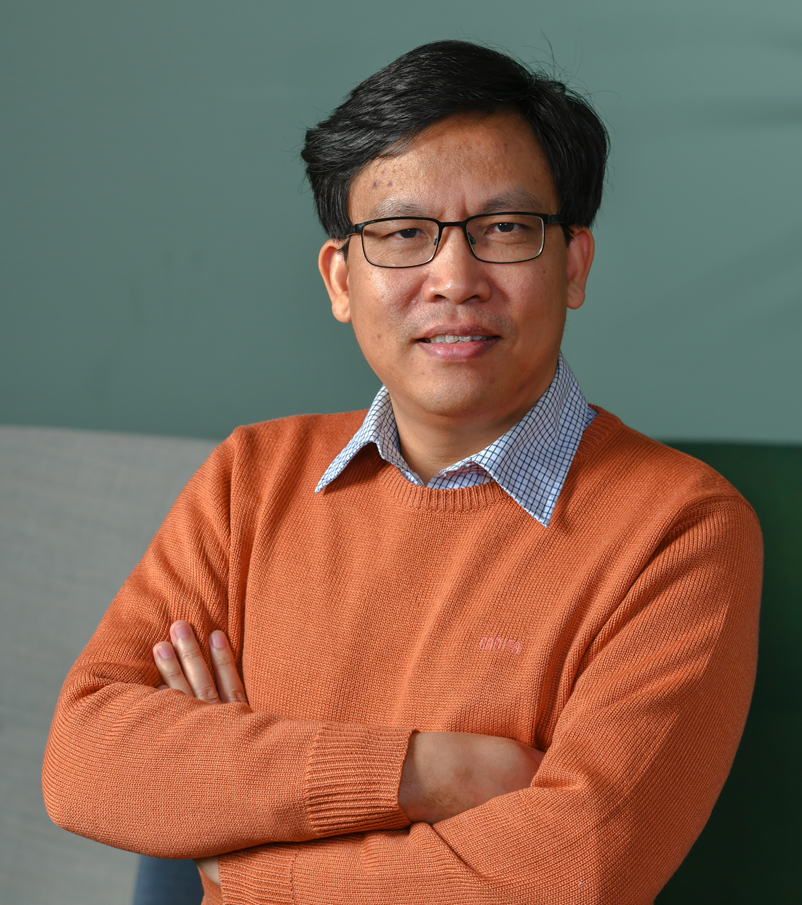
View scholarshipsI am Truyen Tran, Professor and Head of AI, Health and Science at the Applied Artificial Intelligence Institute, Deakin University. My work spans foundational AI, AI for scientific discovery, and AI for health, with a growing focus on the parts of intelligence that remain distinctly human: agency, critical thinking, judgement, and taste.
My group develops AI systems that combine language, perception, retrieval, tools, coding, and evaluation, then asks how those systems should be directed, critiqued, and governed when the hardest layer is no longer raw capability but good judgement.
From models to systems: architectures that retrieve, reason, code, plan, propose, evaluate, and interact with domain experts in the loop.
Key information for prospective students, collaborators, and anyone following the reading group.
The scholarship page is the main place for current opportunities across AI Future, AI for Science, and AI for Health, including what to send and how to make contact.
View scholarshipsThe reading page is maintained as a practical schedule page so people can quickly check the exact time, location, upcoming talks, and recent reading club activity.
View reading scheduleCoding, implementation, and many early-stage research moves are now AI-native. The point is no longer to compete with the tool on routine work, but to work one level above it.
Read the full manifestoAI-generated ideas and implementations are treated as the new baseline, not as surprising exceptions. Real novelty starts one step beyond what the best available AI can already propose.
A PhD is still about novelty and substance, but now it also requires independent investigation in an AI-rich environment: conceiving problems, directing agents, judging results, and building work with lasting value.
The skills with the longest shelf-life are agency, critical thinking, judgement, taste, mathematics, philosophy, product sense, and the ability to invent new directions rather than chase incremental gains.
A working environment for AI-native discovery, invention, proof, education, and deployment.
A growing ecosystem of specialist agents for strategy, invention, policy, scientific reasoning, and domain advice, designed to coordinate serious work rather than produce one-off demos.
Scientific discovery workflows and AI-assisted mathematics, including hypothesis generation, rediscovery benchmarks, theorem handoff, and formal verification through Lean.
Work on energy-aware AI, evidence-centric clinical generation, and multi-sense architectures that connect perception, memory, planning, action, and safety.
Research-management systems that treat AI as part of the research team: literature analysis, ideation, experiment planning, supervision, reporting, and strategic judgement.
Code-first grant and research tooling for opportunity diagnosis, proposal shaping, reviewer simulation, and long-horizon program design.
The portfolio is designed to connect frontier method development with systems that matter in laboratories, clinics, and public life.
Capabilities are no longer the main story on simple tasks. The frontier is agency, critical thinking, judgement, taste, and trustworthy action in open-ended environments, alongside long-horizon work on the physics of intelligence, low-energy AI, full embodiment, and post-Transformer alternatives.
Systems for materials, molecules, mathematics, and experimental work where the bottleneck is no longer text generation, but scientific rigor, iteration speed, and integration with real research workflows.
Clinical AI systems for imaging, longitudinal health, monitoring, and decision support where the hard problems are deployment, trust, workflow fit, and measurable patient benefit.
The challenge is no longer whether models can answer or code in isolation, but whether systems can exercise agency, support critical thinking, and defer to human judgement in real work.
Research planning, experiment selection, code-assisted analysis, evaluation, and scientific communication in large discovery spaces.
Clinical support systems that observe, retrieve, reason, and support decisions with safety and human oversight in mind.
Temporal and multimodal representations of patient state for monitoring, intervention timing, and long-range care planning.
Agentic workflows for research synthesis, coding, experimentation, evaluation, and collaboration across teams and domains.
A snapshot of active themes across the group, spanning foundational architectures and high-consequence applications.
Systems that can reason scientifically, write code, coordinate tools, and accelerate discovery loops.
Representations of longitudinal patient state built for intervention timing, monitoring, and decision support under real clinical constraints.
Architectures that combine model inference with retrieval, memory, planning, and explicit evaluation loops while keeping human judgement in the loop.
Generative, retrieval-based, and simulation-linked systems for materials, molecules, and inverse design where validation cost is high.
Alignment, oversight, value sensitivity, decision quality, and practical governance for deployed AI.
Scalable tools for imaging, mental health, public health, and resource-constrained settings.
Selected signals across research, funding, and public engagement provide a concise view of the work and its reach.
AI Future, AI for Science, and AI for Health define the portfolio.
Including MRFF-supported programs in cardiovascular health and AI in mental health.
Talks and keynotes include Los Alamos, RIVF, VNU Hanoi, and public lecture circuits.
I work with students, researchers, clinicians, industry, government, and global partners who want to build high-impact AI systems with real-world consequence.
For prospective PhD students and postdocs interested in reliable AI systems, scientific discovery, health AI, and real deployment constraints.
What to sendFor academics and labs exploring shared questions in AI systems, science, medicine, and translational methods.
Research collaborationsFor industry, health, government, and defence partners seeking technically serious collaboration pathways.
Partnership routes